
Why Thali Is a Smart Weekday Lunch Choice in Newark
Lunchtime in Newark moves fast. Lines build, meetings wait, and you have maybe forty minutes to eat something that carries you through the afternoon. A thali fits that window. Order one at most Indian restaurants Newark NJ and you get a complete meal rather than a single dish: dal, two or three vegetable curries, rice, fresh bread, yogurt, pickle, and often a small sweet, portioned side by side.
You don’t have to choose between filling and balanced, and a thali usually costs less than a takeout combo you forget by 3 p.m. Two details decide whether lunch works: your spice level and when you walk in. Both are covered below, with how weekday lunch timing plays out at busy Indian restaurants in Newark NJ.
What Makes Up a Thali
A thali is a round platter lined with small bowls called katoris, each holding a different dish. Everything arrives at once, so you can mix and dip as you eat. Vegetarian or meat-based, the platter is built the same way: several small portions instead of one large dish.
Here’s what typically lands on the platter:
- Dal – a warm lentil stew, the backbone of most thalis
- Vegetable curries – one or two seasonal veggie dishes, sometimes dry, sometimes saucy
- Rice – plain steamed or a fragrant variety like lemon or jeera rice
- Roti or dosa – a flatbread or crisp South Indian crepe for scooping
- Sambar – a tangy lentil-and-vegetable soup, a South Indian staple
- Chutneys – coconut, tomato, or mint dips for adding zing
- Curd (yogurt) – a cooling spoonful that tames the heat
- Dessert – a small sweet like payasam or halwa to finish
- Salad – a tiny fresh side of onion, cucumber, or carrot
You can eat the bowls in any order, and one platter covers spicy, tangy, creamy, and sweet. Office workers order it because it lands fast and fills you up. Many spots also offer an unlimited thali, where servers keep refilling your bowls until you tell them to stop – good value if you’re hungry.
If you’re looking for a solid thali near Newark, start with the thali-friendly Indian restaurants in Newark, NJ that serve weekday lunch platters.
Spice Level Cheat Sheet for Newark Thali
This table maps each spice level to what you can expect on your plate at an Indian restaurant in Newark, NJ.
| Spice Level | Typical Heat Description | Example Dishes | Who It Suits |
|---|---|---|---|
| Mild | Gentle warmth; aromatic spices come through without any burn. You taste cumin, turmeric, and coriander rather than chili. | Butter chicken, paneer butter masala, dal tadka, plain dosa with coconut chutney, vegetable korma | First-timers, kids, anyone sensitive to heat, and office workers who want a filling lunch without breaking a sweat |
| Medium | A clear kick that builds slowly. You feel the chili, but it doesn’t overpower the dish – a tingle on the lips and back of the throat. | Chicken tikka masala, chana masala, mysore dosa, veg biryani, most weekday thali plates | The everyday diner who wants real flavor with a little edge – the sweet spot for most lunch crowds |
| Hot | Bold heat that lingers. Your forehead may glisten, and you’ll probably reach for water or lassi between bites. | Chicken chettinad, Andhra-style curries, gongura dishes, spicy biryani, vindaloo | Seasoned spice lovers, regulars who order “Indian hot,” and anyone chasing that regional punch |
| Extra Hot | Serious, no-joke heat. The chili leads the flavor, and the burn sticks around long after the meal. Ask for it only if you know what you’re doing. | Phaal-style curries, extreme Andhra or Chettinad specials, extra-hot biryani on request, fiery chili dosa | Thrill-seekers and heat veterans who think “hot” is a warm-up |
How to Read This Table in Practice
Heat and flavor are two separate things. A mild thali can still be heavily spiced and fragrant; it simply skips the chili burn, which is what makes it a reasonable first order: variety, texture, and aroma on one platter without a five-alarm experience.
On a first visit, start at Mild or Medium, then ask your server to nudge the heat up next time. Most kitchens will adjust a dish either way, and regulars often settle somewhere between Medium and Hot once they learn their own comfort line. For a quick weekday lunch near the office, Medium is usually enough to wake you up without wrecking your afternoon meeting.
Quick Tips Before You Order
- Be specific about your heat tolerance – “mild but flavorful” is a real, respected request.
- Order a cooling side like raita, plain lassi, or coconut chutney to balance a Hot dish.
- If you are sharing a thali, pick one Hot dish and keep the rest Medium or Mild for the table.
- Ask which dishes are naturally spicy versus ones the kitchen can adjust – some regional curries are built to be hot.
To put the cheat sheet to work, browse the Indian restaurants in Newark NJ and find a weekday thali at the heat you want.
How to Nail Your Spice Level When You Order Thali in Newark
Step into any of the Indian restaurants in Newark, NJ, and you’ll hear the same question within seconds: “How spicy would you like that?” It sounds simple, but spice level is one of the most personal choices on the menu – and one of the easiest places for a good lunch to go sideways. Here’s how to get it right the first time.
| Spice Level | What It Typically Delivers | Who It Suits |
|---|---|---|
| Mild | Warm aromatics, almost no burn, kid-friendly | First-timers, sensitive palates, a mild thali at lunch |
| Medium | A gentle, building warmth that lets the dal and curries shine | Most diners and office workers who want balance |
| Hot | Noticeable heat up front that lingers pleasantly | Heat-seekers who still want to taste the food |
| Extra Hot | Serious chili punch, sweat-on-the-brow territory | Veterans who order a spicy thali out of habit |
Takeaway: when in doubt, order one notch below your usual – you can always ask for more heat, but you can’t take it back out.
Medium is a moving target. Every kitchen runs on its own baseline, so a “medium” thali at one Newark spot can land noticeably hotter than the same word down the street. Regional cooking styles, whichever chef is on shift, and even that week’s batch of chilies all nudge the dial. That’s normal, and it’s exactly why clear communication beats guesswork.
When you order thali, spell out your preference in plain language instead of trusting a single word. Try phrases like “medium, but on the milder side” or “I like it hot – don’t hold back.” Comparing it to something you already know – sriracha, Thai takeout, a chili you cook with at home – gives the kitchen a real target. Ordering for a group? Ask for the base thali mild and request chutney or a chili condiment on the side, so everyone can fine-tune their own adjustable heat.
Thali is built for this. Because it arrives as a spread of small bowls, the heat often lives in the chutneys, pickles, and one or two curries rather than being baked into every bite. Ask which items carry the kick, then taste as you go.

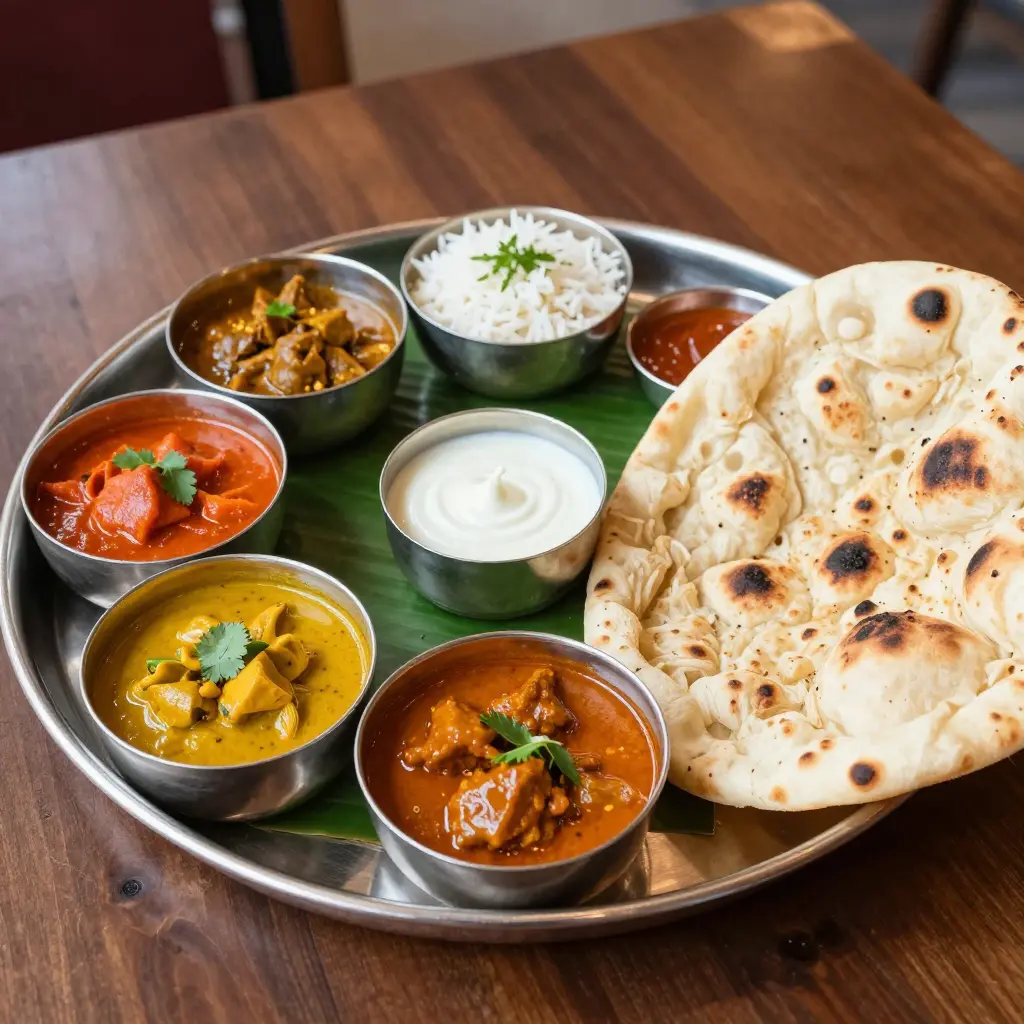
The image shows the layout: the platter is the outer circle, the mound in the middle is your rice, and the little bowls around the rim each hold something different – dal, curries, yogurt, pickles, chutneys. That ring-and-center shape is why a thali is easy to eat in one sitting: variety on one plate, portioned and ready.
Weekday Lunch Timing at Indian Restaurants in Newark, NJ
If you work near downtown Newark or commute in from Journal Square, weekday lunch timing decides how your office lunch break goes. Most Indian kitchens in the area open their lunch service around 11:30 a.m. and wind it down by 2:30 p.m. That window looks generous, but what you get inside it shifts fast depending on when you walk through the door.
The Typical Lunch Service Window
Weekday lunch at most Indian restaurants here runs from roughly 11:30 a.m. to 2:30 p.m., with the full menu usually available. Several spots also put out a smaller express list or a ready-made thali plate for people who need to eat and get back to their desks.
Best Arrival Times to Beat the Rush
Arrive between 11:30 a.m. and noon and you’ll usually get a table quickly, with food landing within minutes. If your office lunch break has any flexibility, this is the easiest slot.
The lunch rush arrives between about 12:15 p.m. and 1:15 p.m., when office workers, students, and nearby hospital and court staff all file in at once. Tables fill quickly, servers move faster, and the kitchen juggles a heavier stream of thali and dosa orders at the same time.
| Time Window | What to Expect |
|---|---|
| 11:30 a.m. – 12:00 p.m. | Quietest period; fast seating and quick service |
| 12:00 p.m. – 1:15 p.m. | Peak lunch rush; expect a short wait for tables |
| 1:15 p.m. – 2:30 p.m. | Crowd thins out; service speeds up again |
| After 2:30 p.m. | Lunch service winds down before dinner prep |
How Peak Demand Affects Seating and Service
When the room is full, service stays quick but feels less personal. Bigger groups may wait longer than solo diners, and shared counters or two-tops turn over fastest. If you are mapping out Indian restaurants in Journal Square, aim for the edges of the rush rather than the middle.
Practical Tip: Lock in your weekday lunch timing by arriving before 12:00 p.m. or after 1:15 p.m. If you are stuck with a noon office lunch break, call ahead, order a fixed thali combo, or grab takeout, so you skip the table wait entirely.
A little planning at the front end turns a rushed midday meal into an easy one, whichever Indian lunch options in Newark you pick.
Breaking Down the Weekday Lunch Rush
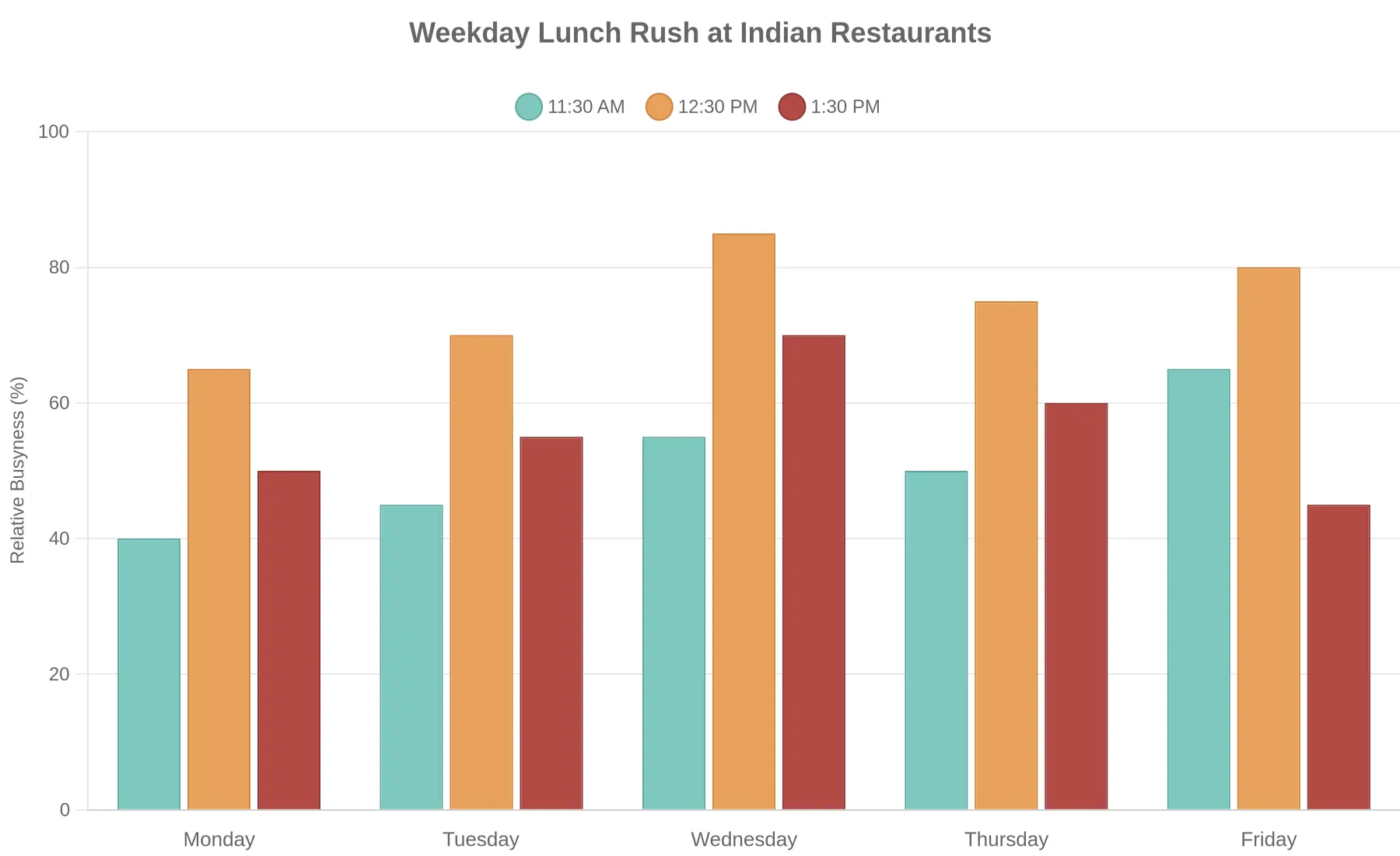
Show up at an Indian restaurant at 12:30 PM sharp and you may find a line out the door. The lunch rush in Newark follows a predictable rhythm, and once you see the pattern, you can plan around it. The chart below maps relative busyness across the 11:30 AM to 2:30 PM window for a typical Monday through Friday, so you can tell when to walk in for a quiet seat and when to expect a crowd.
What the Chart Tells You
The pattern:
- Wednesday is the peak. Midweek hits hardest, with the 12:30 PM slot climbing to the highest point of the week – the classic midweek office crowd all showing up at once.
- 12:30 PM is universally the busiest slot. No matter the day, that half-hour block is where the surge concentrates. If you want the calm, aim for the shoulder hours.
- 11:30 AM is your quiet window. Beat the rush by arriving early. You’ll usually walk right in and get your thali before the lunchtime wave builds.
- Friday shifts early. Things start hopping closer to 11:30 AM on Fridays, then taper off by 1:30 PM as many folks head out early for the weekend.
The Weekday Cheat Sheet
The same data in a quick-glance format you can screenshot before you head out:
| Day | 11:30 AM | 12:30 PM | 1:30 PM | Verdict |
|---|---|---|---|---|
| Monday | Quiet | Busy | Moderate | Easy early start |
| Tuesday | Quiet | Busy | Moderate | Easy early start |
| Wednesday | Moderate | Peak | Busy | Avoid 12:30 PM |
| Thursday | Moderate | Busy | Moderate | Busy but manageable |
| Friday | Busy | Busy | Quiet | Go after 1:30 PM |
Timing Tips for a Relaxed Thali
For a calmer meal without elbows in everyone’s space:
- Arrive at opening, around 11:30 AM if you want the pick of the tables and a relaxed start.
- Wait until 1:45 PM if you’re not in a rush and prefer a calmer room.
- Skip Wednesday at 12:30 PM unless you genuinely enjoy a lively, buzzing lunch room.
If you want a spot that handles the lunch crowd well, browse Indian restaurants near Journal Square. Pair the timing with your preferred spice level and weekday lunch stops being a gamble.
Practical Tips for Ordering Thali at Indian Restaurants in Newark, NJ
A thali is the simplest way to eat a full Indian meal on a busy day: one platter, many little bowls, no ordering dish by dish. Ready to order thali like a regular? Follow these steps.
-
Lock in your spice level first. Ask the server for the kitchen’s scale (usually mild, medium, or hot) and say your number out loud. “Medium” in some Newark kitchens runs hotter than a generic medium elsewhere, so when in doubt, request mild and add a side of pickle or chutney for heat you fully control.
-
Ask about refills before you dig in. Many thali combos include unlimited rice, roti, or sambar. Confirm what’s included, how many refills you get, and whether extras cost more – before the first plate lands. It avoids bill surprises and keeps your lunch moving.
-
Pair your thali combo with one extra. Share a thali plus a dosa or biryani between two people to sample more for less. A crisp dosa adds crunch; a biryani adds a fragrant rice hit. For a fuller spread, check the Indian restaurants in Newark, NJ that plate both side by side.
-
Time your order for a weekday lunch break. Arrive before noon or after 1:15 p.m. to dodge the downtown rush. If you only have 30 minutes, call ahead, ask how long a thali takes to fire, and request the check the moment your food arrives.
-
Customize without complicating. Mention allergies, no-onion-no-garlic needs, or Jain preferences when you place the order so the kitchen can adjust in a single pass.
Treat these five steps as your script, and every weekday hunt for indian lunch options Newark throws at you becomes a matter of minutes.
Regional Thali Styles Around Newark: What to Order at Weekday Lunch
A thali is a round tray holding small bowls (katoris) of curries, dal, rice, bread, and a sweet, so you taste a whole meal in one sitting. Around Newark, you’ll cross paths with three main styles, and each one treats spice and timing a little differently. Here’s how to pick the right tray for your lunch break.
South Indian Thali
Rice, sambar, rasam, and a couple of vegetable curries, often with generous refills. Heat stays moderate – warm and sour rather than fiery – which makes a South Indian thali a safe bet before an afternoon meeting. Most plates hit the table fast, so it’s an easy 30-minute lunch.
North Indian Thali
Creamy paneer, richer gravies, hot roti or naan, and a heavier dessert. A North Indian thali runs bolder, with the spice level climbing higher and layered masalas that linger. It’s hugely filling – perfect if you skipped breakfast – but expect a slightly longer wait, closer to 40 minutes, while everything is assembled.
Vegetarian and No-Onion-No-Garlic Thali
Plenty of kitchens here serve fully vegetarian thalis, and several prepare no-onion-no-garlic (Jain-style) versions for diners with dietary or religious needs. These vegetarian thali options tend to be the mildest, leaning on cumin, coriander, and turmeric instead of chili heat – a gentle, plant-based pick that won’t slow you down. If you want to compare what’s close by, browse Indian restaurants around Newark NJ before you head out.
Quick Comparison
| Thali Style | Spice Level (1-5) | Best For | Weekday Lunch Pace |
|---|---|---|---|
| South Indian thali | 2-3 | Light, tangy meals | Fast, about 30 min |
| North Indian thali | 3-5 | Hearty, filling lunches | Steady, about 40 min |
| Vegetarian thali | 2-3 | Plant-based diners | Fast to moderate |
| No-onion-no-garlic thali | 1-2 | Jain / dietary-friendly diners | Moderate, pre-ordering helps |
Short on time and want gentle heat? Order South Indian or vegetarian. Save a North Indian thali for a day you can linger.
Where Thali Diners Land on the Heat Scale
The chart below breaks down spice-level preferences among thali diners, and the results are predictable: the vast majority land somewhere in the middle. Medium heat is the comfort zone, and only a minority chase the fire.
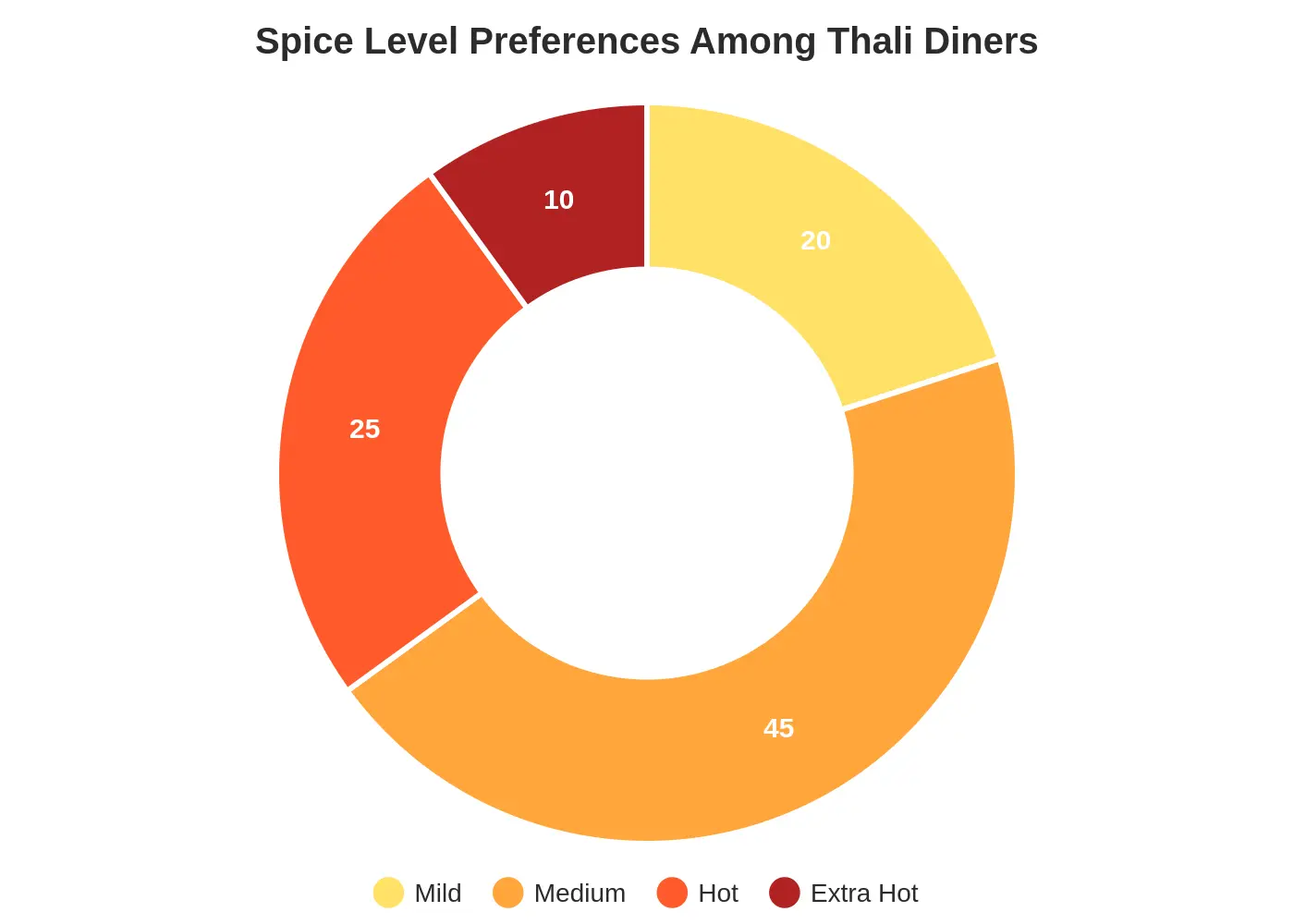
Here’s the breakdown in plain numbers:
| Spice Level | Share of Diners | What It Feels Like |
|---|---|---|
| Mild | 20% | A gentle warmth with no lingering burn |
| Medium | 45% | Balanced flavor and a steady, pleasant heat |
| Hot | 25% | A confident kick that builds with each bite |
| Extra Hot | 10% | Full-throttle heat for seasoned spice chasers |
Why Medium Wins
Medium lets the layered masalas, tangy sambhar, and cooling raita come through without drowning them in chili. If you’re new to thali or ordering for a group, starting at medium gives you the truest taste of the kitchen’s craft.
A Quick Word on Reading Your Own Limits
Spice tolerance is personal, and there’s no shame in ordering mild, especially during a busy workday. Talk to your server, ask about the day’s preparations, and dial things up or down as you like. If you’re exploring the neighborhood’s lunch scene, this guide to authentic Indian restaurants in Newark, NJ can help you plan a weekday visit around your break.
Where to Enjoy Thali on a Weekday
When lunchtime hits on a busy weekday, a thali is one of the easiest ways to eat well without a long wait. A single platter usually bundles rice, bread, dal, a couple of curries, and a sweet, so you get real variety without ordering dish by dish.
If you work or study downtown, start with a shortlist of Indian restaurants Newark NJ that serve thali at midday. Aim for spots that keep weekday hours around the traditional lunch window, roughly 11:30 a.m. to 2:30 p.m., when the kitchen moves fastest.
For a sit-down option close to the office, compare Indian lunch options Newark by checking whether the thali is unlimited, whether refills are free, and how spicy the default gravies run. Most kitchens will happily dial the heat up or down if you ask when you order.
If you’re coming from Journal Square, look for thali near Journal Square that stays open through the afternoon, so a late meeting does not cost you a meal. Confirm the day’s special before you head over, since thali menus tend to rotate.
A few quick pointers to keep your weekday thali run smooth:
- Go early to beat the noon rush.
- Ask about refills and spice level before ordering.
- Favor places with steady, predictable weekday hours.
- Pair the platter with a chai to round out the meal.
FAQ: Ordering Thali at Indian Restaurants in Newark, NJ
These are the questions Newark diners ask most often about thali, spice level, and weekday lunch timing.
Is thali vegetarian?
Most thali served at Indian restaurants in Newark NJ is fully vegetarian. A classic thali trays up lentils (dal), seasonal vegetables, rice, roti or puri, pickles, and a sweet, so you get a balanced, plant-forward plate without even trying. That said, plenty of spots also run a non-veg thali with chicken, goat, or fish curry as the star. If you want a strictly meat-free meal, just confirm with your server, and if you keep a Jain or no-onion, no-garlic diet, ask ahead so the kitchen can prep your thali the right way. You can also browse Indian restaurants with dedicated Jain and no-onion, no-garlic menus before you head out.
Can I adjust the spice level?
Yes, almost always. Thali is a set spread, but the kitchen can dial the heat up or down on the curries, sambar, and chutneys to match your comfort zone. Just tell your server “mild,” “medium,” or “spicy” when you order, and mention any specific dishes you want toned down. For first-timers, medium is a safe, flavorful middle ground.
What is the best weekday lunch time to avoid the rush?
The quietest window is 11:30 AM to 12:00 PM, before the office crowd shows up. If you miss it, aim for after 1:30 PM, when the noon rush thins out and tables open up. Friday starts busy earlier and clears earlier than Monday through Thursday, so plan an extra buffer or call ahead.
Does thali come with unlimited refills?
It depends on the restaurant. Many thali spots do offer unlimited refills on rice, breads, and certain curries as part of a fixed lunch price, which makes it good value for hungry office workers. Others serve a set portion with no refills. It is always smart to ask your server whether refills are included before you order.
Which thali style is mildest?
Gujarati and South Indian thali styles tend to be the mildest, leaning sweet, tangy, and gently spiced rather than fiery. North Indian and Punjabi thali often bring more heat, especially in the curries. If you are spice-shy, ask for a Gujarati or South Indian thali and request mild chutneys on the side.
Quick recap
Vegetarian? Usually yes. Spice level? Adjustable on request. Best time? 11:30 AM or after 1:30 PM. Refills? Ask first. Mildest style? Gujarati or South Indian. With those basics down, ordering thali in Newark NJ is simple and filling.
Wrapping It Up: Get Your Weekday Thali Right in Newark
Ordering a great thali in Newark NJ comes down to two decisions: your spice level and your weekday lunch timing. Nail both, and an ordinary midday meal becomes something you look forward to.
A thali is built to be balanced rather than punishing. If you are new to Indian food, start with mild or medium and see how the dal, sabzi, and chutneys fit together. If you already love heat, ask for medium-to-hot so the flavors stay bright instead of overwhelming. Either way, speaking up about your spice level before you order gets you closer to what you actually want.
On timing, arrive before noon or after 1:30 PM on weekdays. Come early and you beat the office crowd; come after the rush and you often find the kitchen is calmer too.
Put both habits together, and your weekday thali becomes a reliable lunch instead of a gamble. Ready to plan your next one? Browse the Indian restaurants in Newark, NJ that do thali right, pick your spice level, and lock in a weekday lunch window that works.