
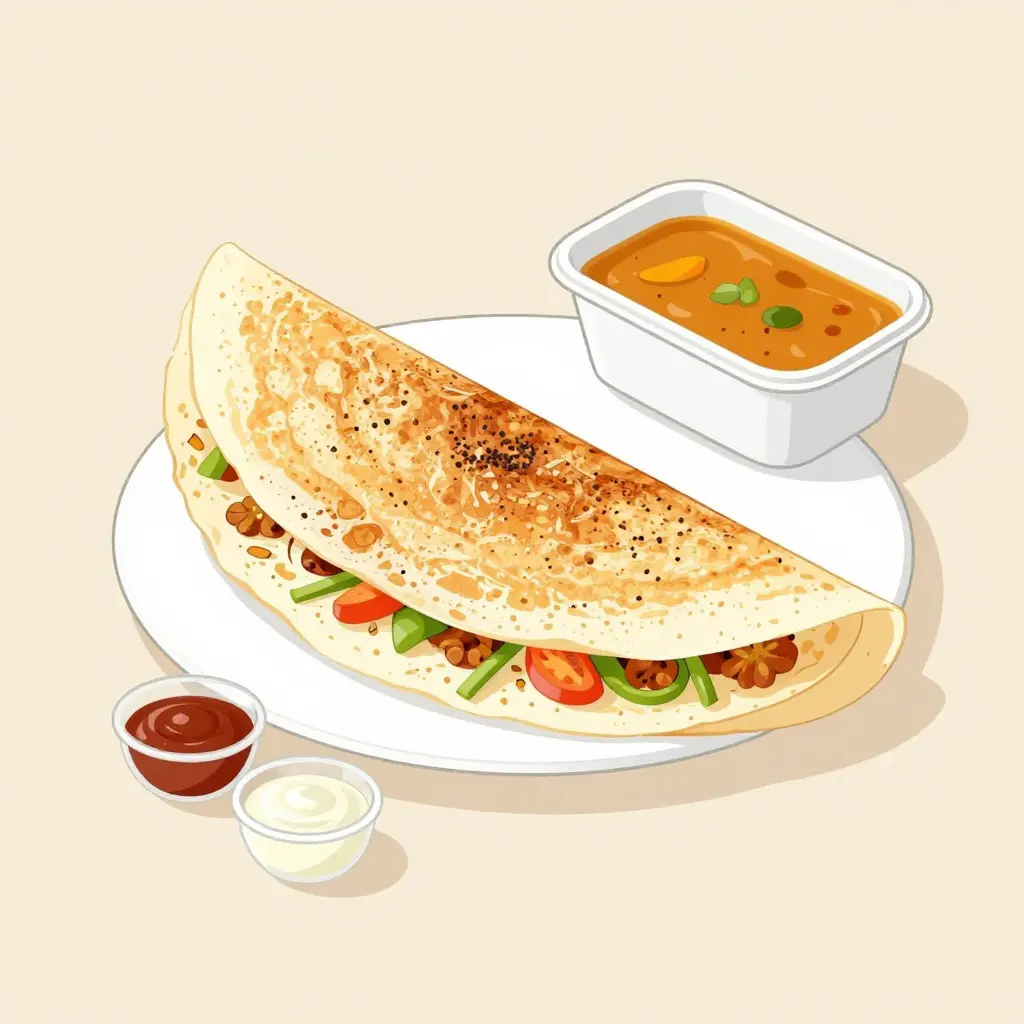
Dosa Takeout, Done Right
Searching for a dosa express near me usually starts the same way: you’re hungry, you want something crispy, tangy, and hot, and you want it now. That works fine for a quick lunch, a lazy dinner, or a weeknight meal for the family. The trouble starts once the food is packed and you’re driving. Two things decide whether it still tastes good at home: how hot the sambar stays and how crisp the dosa stays.
Those two details matter more than anything else in the bag. Steaming sambar and a dosa that still cracks when you bite it are the reason to order out instead of settling for something bland. What follows is simple—how to pack, carry, and reheat the order so it lands close to how it tasted off the griddle.
You’ll also learn how to tell whether a dosa near me spot actually understands takeout, what to ask for at pickup, and the small habits that make the biggest difference. Start with a dosa express near me you trust, then use what comes next.
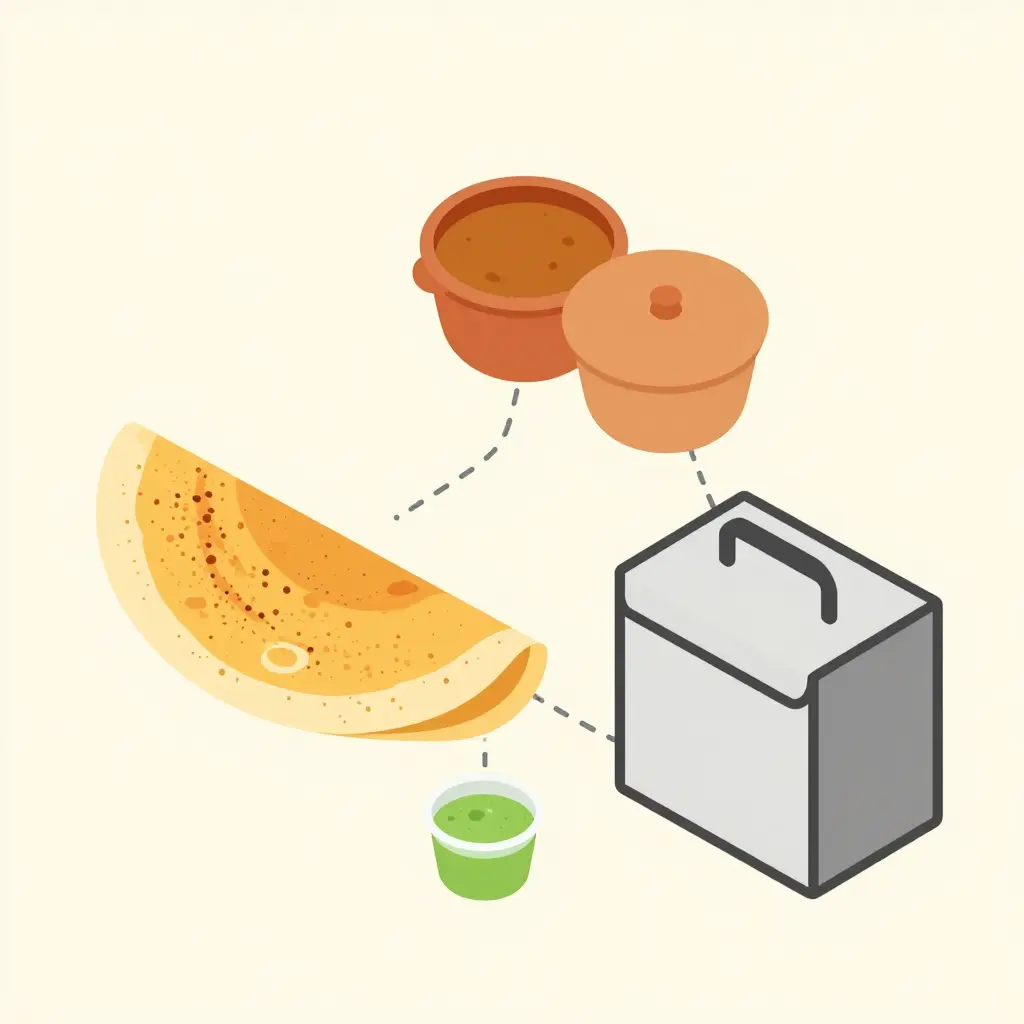
The schematic makes the one rule clear: keep the wet and the crisp apart. The folded dosa, the sambar container, and the chutney cup each ride in the insulated bag as their own item instead of stacked together. That separation is what stops steam from softening the dosa and lets the sambar hold its heat.
The Science of Keeping Dosa Crisp
Trapped moisture is what kills a takeout dosa. The fix is short: let the steam escape, keep the wet and dry items apart, and wrap the dosa so condensation doesn’t sit on it.
A dosa comes off the griddle thin and brittle, held up by countless tiny air pockets inside a starchy shell. Steam still trapped in that shell condenses within minutes, and the crunch turns soft and leathery.
Sambar and chutney speed this up. Both are mostly water, and moisture moves toward anything dry. Put a crisp dosa and a ladle of sambar in one sealed box and the humidity has nowhere to go; it circulates and settles back into the dosa.
Three habits take care of it. Vent the container—crack the lid, punch a few small holes, or use a paper bag instead of a sealed clamshell—so the steam can leave. Keep the sambar in its own spill-proof cup and the chutney in a small ramekin, well away from the bread. Wrap the dosa in parchment or foil and stand it upright rather than flat, so condensation drips off instead of pooling on the surface.
Do this consistently and even a 20-minute drive home won’t cost you the texture. For dosa built to travel, explore a house of dosa that knows the drill.
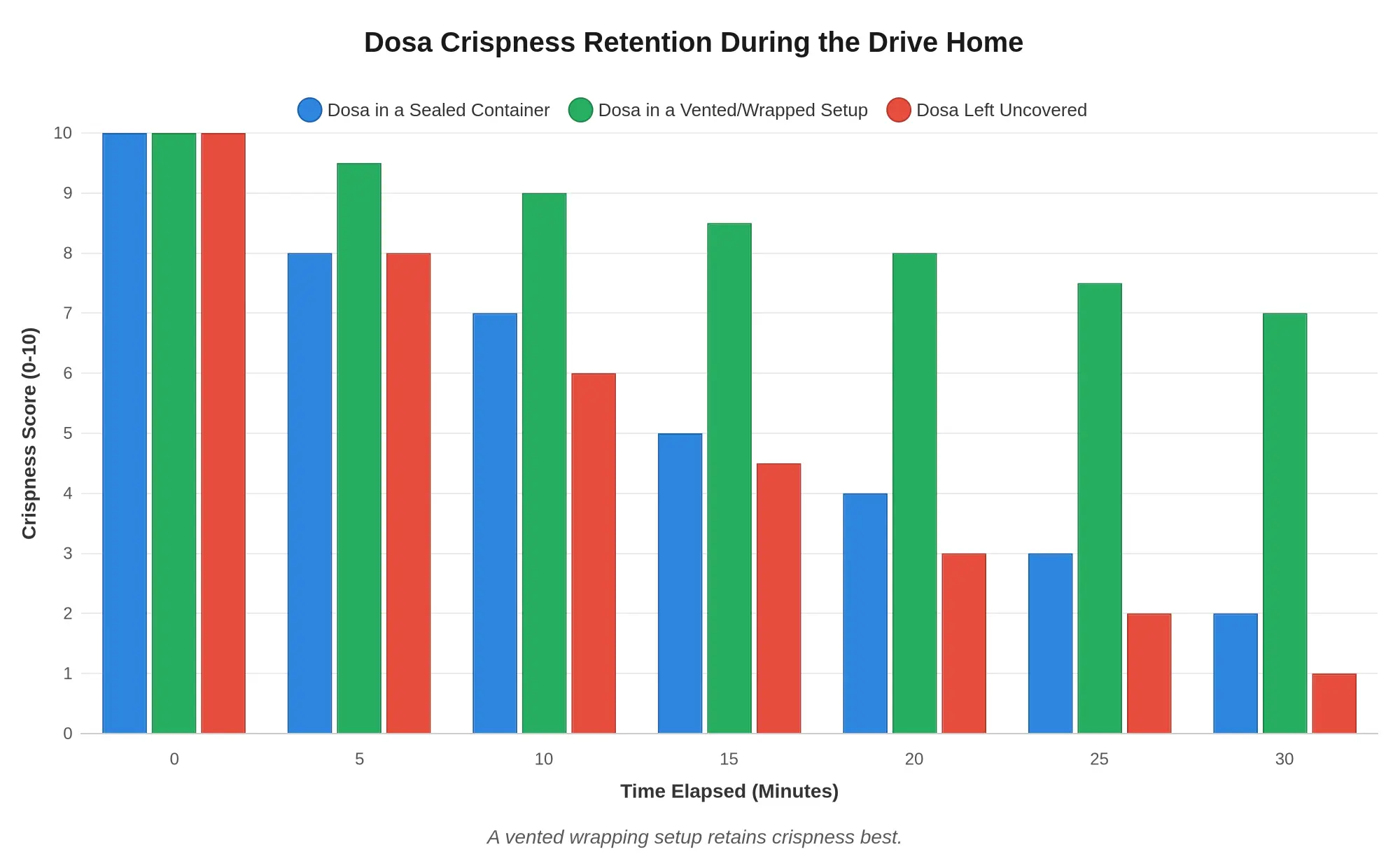
Crispness Score (0-10) vs. Time Elapsed (Minutes). A vented wrapping setup retains crispness best.
How to Keep Sambar Hot on the Drive Home
A lukewarm sambar wastes a good order. It carries so much of the meal, so a few minutes of planning keeps it hot and fragrant from the counter to your table. These are the tricks that work.
- Preheat the container. Pour in a splash of boiling water, swish it around, and empty it right before the sambar goes in. The warmed walls hold heat instead of pulling it into cold plastic.
- Use an insulated flask. A stainless-steel thermos holds heat far better than a paper cup or foil container, and it will often keep sambar hot for an hour or more.
- Seal the lid tight. Trapped steam is trapped heat, so press the lid down firmly and check the seal before you leave.
- Pack the sambar last. Ask the staff to add it to your bag right before you go, so it spends as little time as possible cooling on the counter.
- Order it extra-hot. When you call ahead, ask for the sambar at its hottest. Many kitchens will ladle it straight from a simmering pot.
- Add an outer layer. A clean kitchen towel, a wool scarf, or a cooler sleeve around the flask buys you time on a longer drive.
- Keep it upright and closed. Set it flat on the floor or in a cup holder, and resist peeking. Every time you crack the lid, heat leaves.
Do that and the sambar is still steaming when you sit down to eat. If you want a reliable dosa house in New Jersey that packs its sambar with care, we’re happy to help you eat well at home.
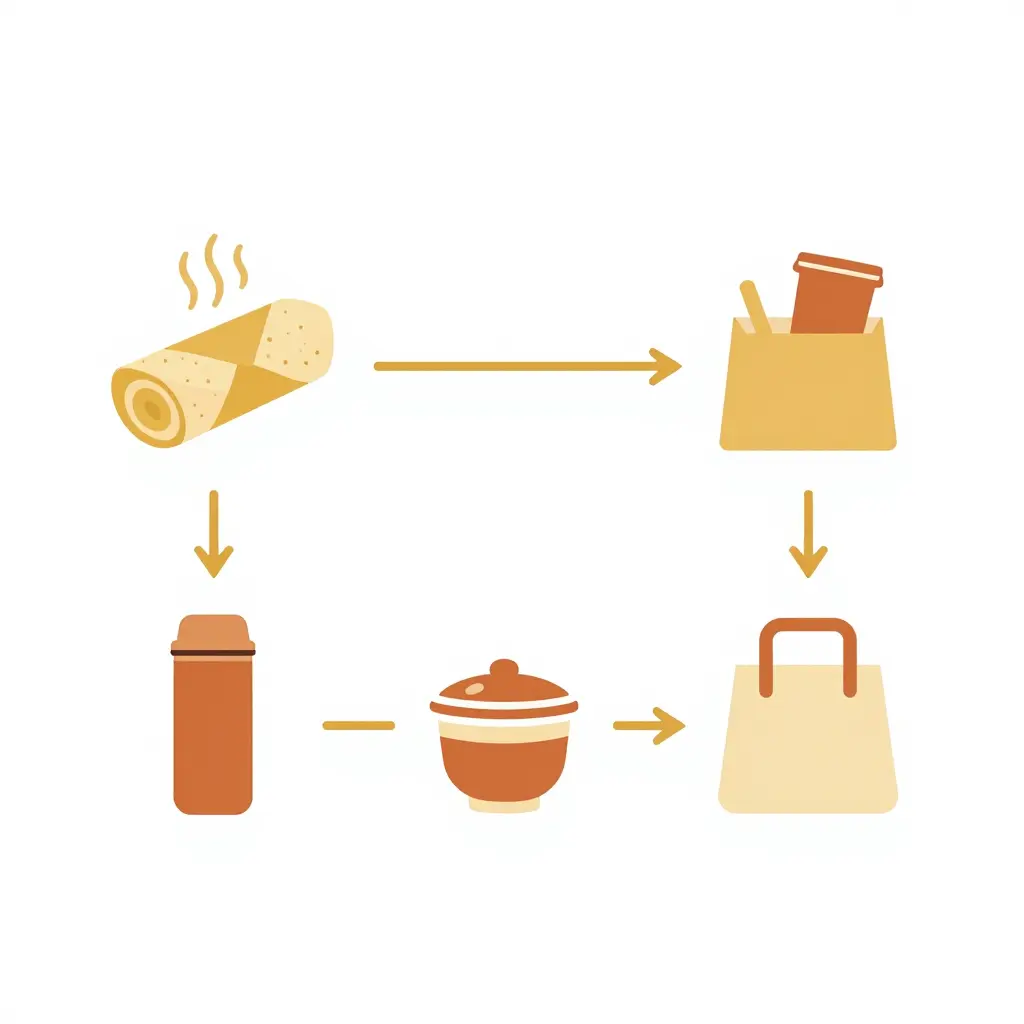
This is the packing order that keeps a dosa express near me order in peak shape from counter to table. Think of four moves as a relay: wrap and vent the dosa, seal the sambar in something insulated, close the chutney in its own cup, then stand everything upright in the bag. Protect the crunch and the heat at once.
Packing and Container Strategy
Your containers decide how this goes. The goal: trap steam where it helps and release it where it hurts. Sambar needs a sealed, heat-locking vessel; dosa needs breathing room so it never steams itself soggy.
Start with the sambar. A tight screw-top jar or a thick insulated thermos is the right call. Airtight matters here because the trapped heat keeps the broth hot and the sealed lid stops leaks from soaking your bag. Wrap the jar in a towel or slide it into an insulated bag for extra warmth on the drive.
Do the opposite with the dosa. Never seal one in foil or a closed box; the trapped moisture softens the shell within minutes. Wrap each dosa loosely in parchment paper, then set it in a vented paper box so steam escapes. Foil works only as a light outer layer around the box, never touching the dosa itself.
If you’re ordering from a Saddle Brook dosa and biryani house, the drive is longer, so pack accordingly. Ask for the sambar in a sealed jar and the dosa in a vented box. That balance keeps each bite hot and crunchy.
Quick Packing Rules
- Sambar: airtight jar or thermos, then an insulated bag.
- Dosa: parchment wrap plus a vented paper box.
- Never seal a dosa in a closed, steamy container.
How the common takeout containers handle each job:
| Container Type | Heat Retention for Sambar | Airflow Suitability for Dosa |
|---|---|---|
| Steel tiffin (stacked) | High – metal holds warmth well when sealed tight | Poor – fully sealed, traps steam and softens dosa |
| Insulated flask (thermos) | Best – keeps sambar hot for 1-2 hours | Poor – no airflow, only good for liquid |
| Plastic takeout cup | Low – cools within 20-30 minutes | None – wrong shape for a flat dosa |
| Foil-lined box | Medium – reflects heat but holds steam in | Fair – traps moisture against the crust, so it softens sooner |
| Paper bag with vent holes | Low – liquid cools fast, no insulation | Excellent – strong airflow keeps the dosa crisp |
Best combined setup: hot sambar in an insulated flask and the dosa in a vented paper bag, so the sambar keeps its heat while the dosa breathes. Order ahead from a dosa express near me spot, ask for the sambar packed separately, and you’re set for the drive home.
Frequently Asked Questions
How long can dosa stay crisp on the drive home?
A dosa straight off the griddle holds its crunch for about 10 to 15 minutes, so the shorter your trip, the better. If the drive runs longer, ask the kitchen to pack each dosa flat rather than folded tightly, and stand the box upright in the bag. To really keep dosa crisp, don’t seal the box while it’s still steaming. Checking your dosa express near me options helps you pick a spot close to home.
Should sambar be packed separately?
Yes, always. Sambar belongs in its own leak-proof container, fully separate from the dosa. That one step protects the dosa’s texture and gives you a warm, flavorful sambar to pour at the table. If a restaurant starts to ladle it over your dosa, ask them to pack it on the side instead.
Can I reheat dosa without making it soggy?
Yes, with dry heat. Warm it on a dry tawa or in a toaster oven for a minute or two, never in a microwave or under a wet lid, since microwaving traps moisture and turns a crisp dosa chewy. If a microwave is all you have, 20 seconds on a paper towel does the least damage.
What is the best container for sambar?
A screw-top stainless steel flask or a thick insulated thermos keeps liquid hottest. Glass jars with tight lids work too, but they cool faster. Whichever you use, fill it close to the top to cut down on air space, since that’s what lets heat escape. That is the easiest way to keep sambar hot all the way home.
How do I keep chutney from ruining the dosa?
Keep the chutney in its own small cup with a secure lid and let it sit beside the dosa, not on it. Chutney is moist, and even a few minutes of contact softens the surface. When you order dosa takeout, ask for chutney and sambar on the side, then dip and drizzle as much as you like once you’re ready to eat.
Takeaway Tips to Remember
Crispy dosa and hot sambar at home come down to a few basics. Keep these four habits in mind every time you pick up takeout:
- Separate wet and dry. Sambar and chutney go in their own sealed containers so steam never reaches the dosa.
- Insulate the sambar. Wrap the container in a towel or use a thermos to hold heat for the whole ride.
- Vent the dosa. Leave the lid slightly open or use a paper-lined box so trapped moisture escapes and the crust stays crisp.
- Pick a dependable dosa express near me. A reliable spot with fast, careful packing does half the work for you.
Pack well and order from a kitchen you trust, and the meal arrives close to how it tastes at the table. That’s the whole secret behind a good dosa near me experience, and it takes very little planning. Next time hunger strikes, order with confidence and follow these steps. For a takeout spot that gets the details right, explore this trusted local dosa destination and enjoy hot sambar and crisp dosa every time.