Understanding Boom Cylinder Drift on Excavators
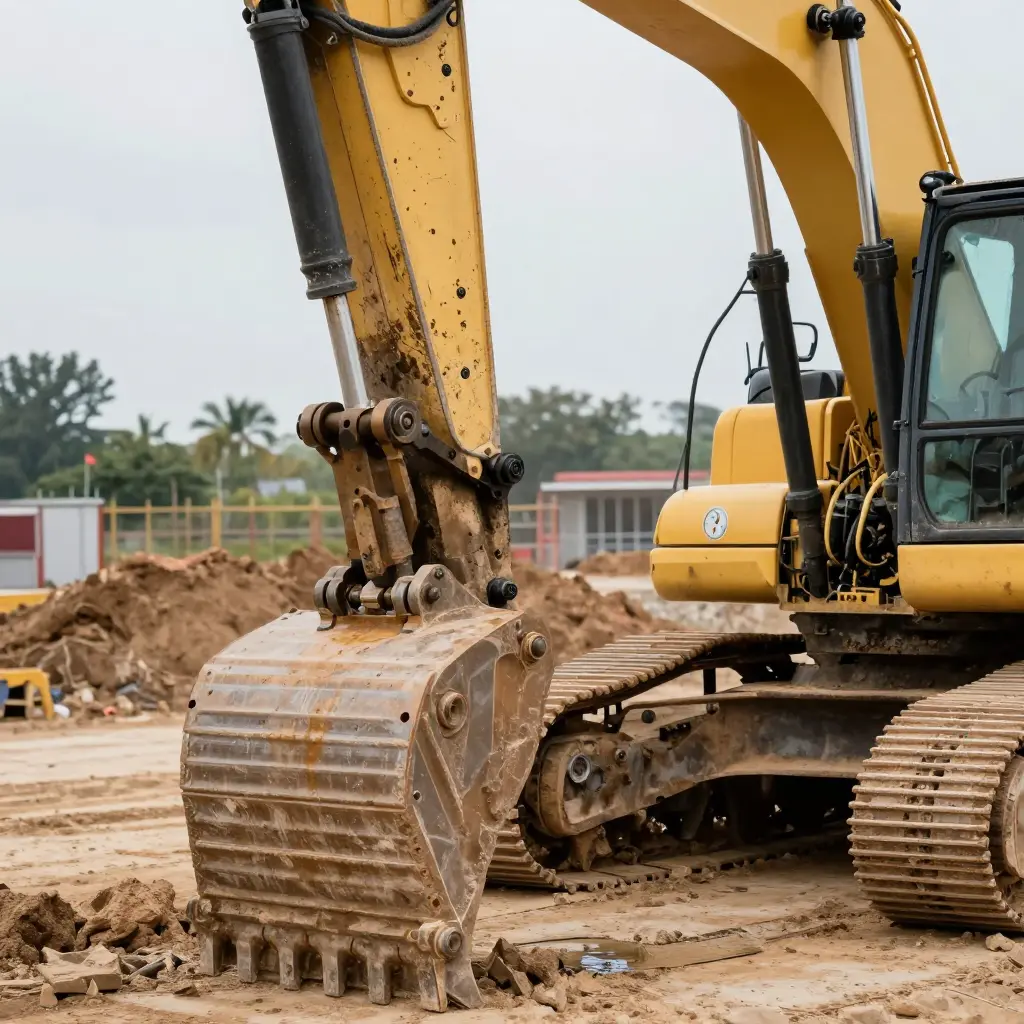
Boom cylinder drift is the slow, unintended lowering of an excavator’s boom while the control lever sits in neutral and the machine is supposed to hold a load or a fixed position. The boom creeps down under gravity, and that movement means something in the hydraulic circuit has stopped holding.
The circuit holds the boom with two things: seals that keep oil on the correct side of the piston, and fluid thick enough to resist slipping through the clearances around the spool. Weaken either one and the boom starts to settle.
Two conditions account for most cases. Valve leakage lets pressurized fluid escape past worn or damaged seals and spools, so the cylinder slowly loses its holding force. Oil temperature changes the viscosity of the fluid, and when the oil runs too hot or too cold, sealing clearances and flow behavior shift, making the drift worse.
A drifting boom can drop a bucket or a load without warning. That makes it a safety problem for the operator, a source of idle time and delays for the site manager, and a recurring cost for the maintenance crew, who still have to work out whether the fault is a seal, a valve, or heat.
Manufacturers hold tight tolerances on these parts for that reason. Zoomlion, founded in 1992 as a dual-listed manufacturer of construction and agricultural machinery, applies hydraulic engineering standards meant to keep hold performance reliable across demanding job sites.
How Boom Cylinder Drift Actually Happens
A boom cylinder is meant to hold the boom steady even when the operator’s hands are off the controls. That holding force does not come from the engine or the main pump. It comes from a hydraulic lock built inside the circuit itself, and the lock is made of three parts that can each fail.
The Three Layers of the Hydraulic Lock
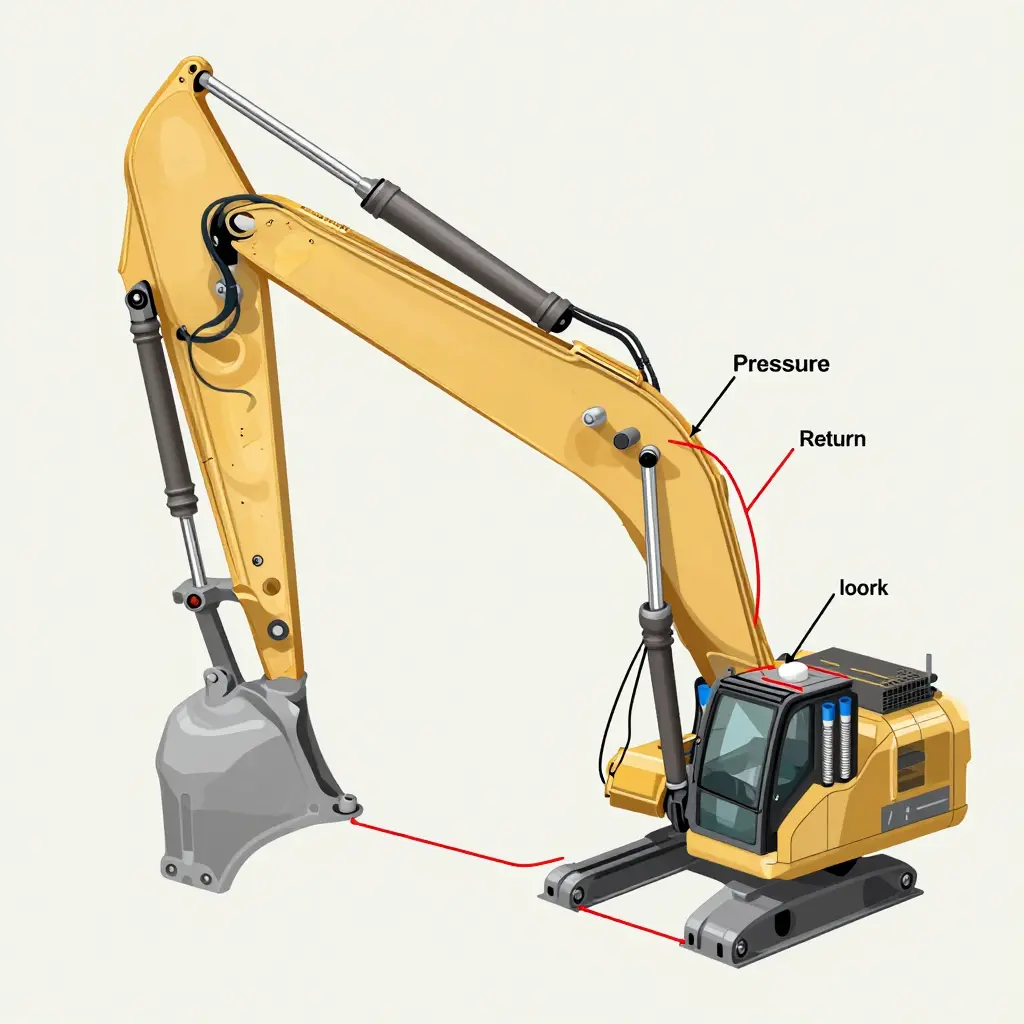
Three components trap the holding pressure:
- Control valve spool – when centered, the spool closes the cylinder ports, blocking oil from leaving either side of the piston.
- Pilot-operated check valves – these one-way valves seat closed, trapping oil so it cannot flow back to the tank.
- Cylinder seals – the piston and rod seals keep oil on its correct side, separating the high-pressure chamber from the low-pressure return.
Together they form a closed, pressurized column of oil that carries the boom’s weight.
Why the Lock Fails: Internal Leakage
Nothing stays sealed forever. Internal leakage is oil that slips past worn spool clearances or damaged seals and travels to the wrong side of the circuit. A raised boom makes it worse because the pressure difference across the seals is larger.
Valve leakage at the spool lets metered oil escape back toward the tank, and worn piston seals let oil cross from the loaded chamber into the return chamber. The result is hydraulic cylinder settling: the boom creeps down even with the valve centered. Heat adds to it, since hot oil is thinner and slips past clearances more easily. A slow drift on a warm day next to a faster drift from a cold start tells you how far the leak has progressed.
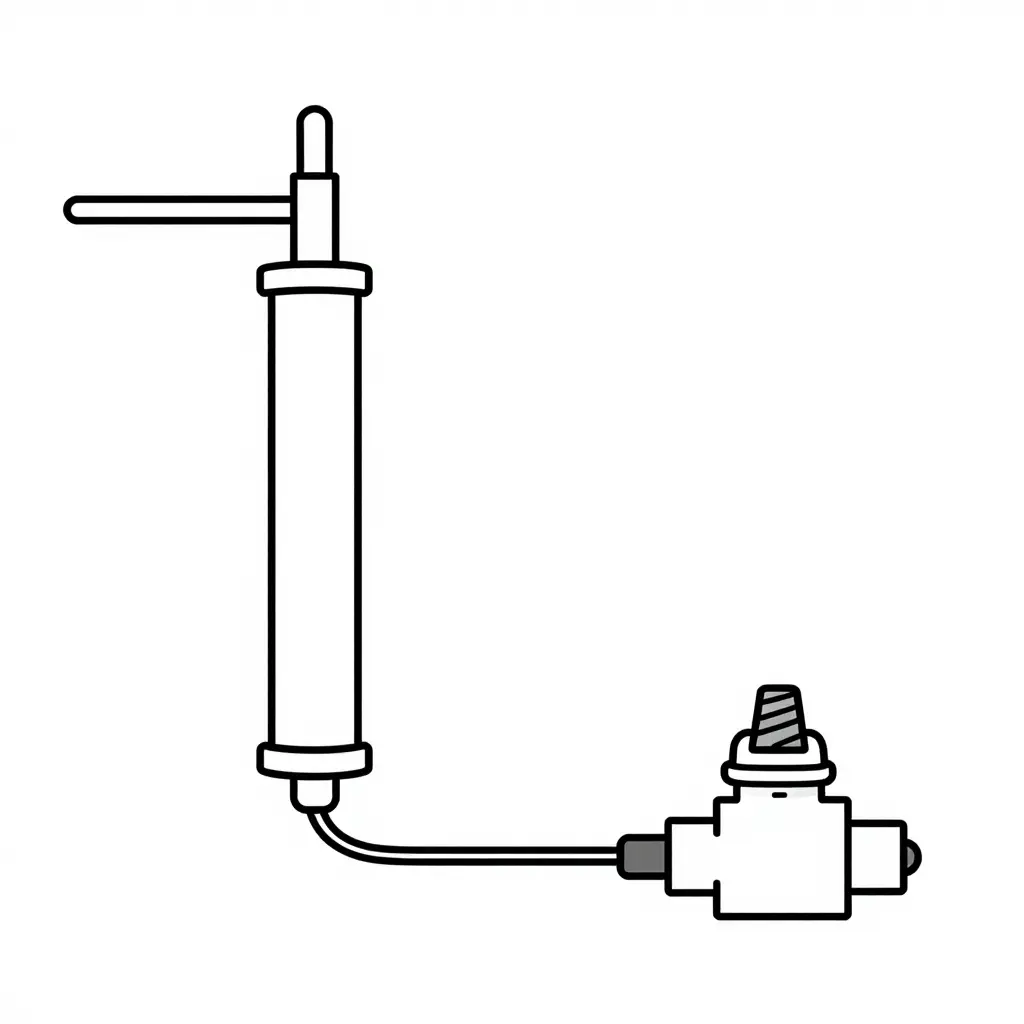
The schematic above traces that path. It shows the cylinder barrel, piston, and rod on one side, connected by two hoses to a directional control valve block that contains the spool. The arrows follow fluid as it slips across the worn spool clearance and past a degraded seal instead of holding the load. That bypass is what lets the boom settle on its own.
Valve Leakage as a Root Cause of Boom Cylinder Drift
When technicians trace boom cylinder drift, valve leakage is usually the first suspect. Knowing where the oil escapes, and why, shortens the repair.
Internal Leakage Versus External Leakage
External leakage is the visible kind. Oil weeps past a fitting, a cracked housing, or a worn rod seal and leaves a wet film or a puddle on the machine. It is obvious, messy, and usually caught during a walk-around inspection.
Internal leakage is the hidden kind. Oil slips past worn spool lands, degraded seals, or a leaking check valve and returns to the tank without ever showing on the outside. The machine looks clean, yet the boom still creeps down under load. It is the more common of the two: bypass paths open up silently over thousands of operating hours, while external leaks tend to announce themselves quickly.
Common Sources of Valve Leakage
Spool wear. In the control valve, the spool and bore rely on a tightly controlled clearance to seal. Grit and heat gradually open that clearance, letting pressurized oil bypass the centered spool and feed the cylinder.
Seal and O-ring degradation. Heat, age, and incompatible fluids harden and flatten the elastomers that seal spool ends, caps, and pilot passages. Once they lose elasticity, oil slips past them.
Pilot-operated check valve failure. The check valve is what holds the boom in place when the lever is neutral. A scored seat or a weak spring lets oil bleed back, and the boom sags.
Contamination-driven scoring. Fine particles from failed filters or worn pumps act like sandpaper, scoring spools, bores, and valve seats. Each scratch becomes a leakage channel.
Catching contamination and heat early protects the sealing surfaces the boom depends on.
Boom cylinder drift diagnosis: match the observed symptom to its likely cause before ordering parts.
| Observed Symptom | Likely Cause | Severity Level | Recommended Check |
|---|---|---|---|
| Slow drift under load | Worn piston seals or internal spool leakage | Moderate | Load-hold test at full operating pressure |
| Drift only when oil is hot | Oil thinning reduces viscosity, seal bypass increases | Moderate | Compare drift cold vs. 80 C with a flow meter |
| Drift in only one direction | Faulty holding valve or load check on one side | Low-Moderate | Swap holding valves side to side to isolate |
| Continuous creep with engine off | Leaking piston seals or worn control valve spool | High | Cap the cylinder ports and watch for rod movement |
| Sudden severe drift | Blown piston seal or failed holding valve | Critical | Inspect seals and pressure-test the circuit |
How Oil Temperature Drives Boom Cylinder Drift
Oil temperature gets less attention than it deserves, because it reshapes the circuit over the course of a shift. As the machine runs, heat builds in the reservoir, hoses, and cylinder bodies, and the fluid that felt thick and responsive at dawn behaves differently by mid-afternoon.
The effect on viscosity is direct. Rising temperature lowers hydraulic oil viscosity, thinning the fluid so it flows more easily through every passage it touches. A healthy circuit tolerates that. A worn one does not, because thin oil escapes through the very clearances that are supposed to seal the spool, piston, and rod glands.
Leakage Through Clearances
Every hydraulic component relies on tight internal clearances to hold pressure. When the fluid thins, internal leakage climbs across valve lands, worn spool bores, and piston seals. A boom cylinder that barely crept when cold can sag noticeably once the oil heats up, because more fluid slips past the sealing surfaces instead of holding the load.
Thermal Expansion and Seal Hardening
Heat also changes the metal. Cylinder tubes, rods, and valve bodies expand, which alters clearance fits and shifts how sealing edges mate. Sustained high temperatures speed up seal hardening at the same time. Rubber and polyurethane seals that should stay pliable stiffen, lose elasticity, and stop conforming to the rod and piston, widening the leak path that temperature already opened.
Cold Start Versus Hot Operation
This is why cold-start behavior misleads operators. In the morning, thick oil masks internal wear, so drift looks minimal. After hours of hard digging, the same machine may drift several times faster. A cold reading flatters a worn cylinder; hot-operation drift exposes its real condition.
Temperature both causes and amplifies drift, so diagnose boom cylinder leakage on a fully warmed-up machine.
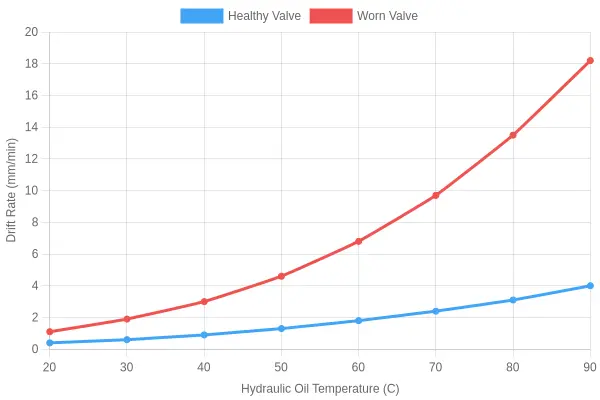
At 20C both valves drift at similar, low rates. As oil temperature climbs, the gap widens. The healthy valve stays under 4 mm/min at 90C, while the worn valve exceeds 18 mm/min. Heat thins the oil, and the worn spool’s larger clearance lets more flow slip past, so drift accelerates. Comparing cold with hot drift exposes valve wear that a single cold test would hide.
Field Troubleshooting Checklist for Boom Cylinder Drift
Boom cylinder drift can come from several sources, and valve leakage and elevated oil temperature are the two most common. Work through this checklist to isolate the cause before ordering parts or scheduling a teardown.
- Measure hydraulic oil temperature at the reservoir and boom cylinder ports once the machine reaches normal operating conditions, and record the values for comparison against the manufacturer’s specification.
- Perform a hydraulic pressure test at the boom cylinder ports to confirm that system pressure matches the rated value under a representative working load.
- Inspect the control valve spool and bore for scoring, sticking, or internal wear that could let pressurized oil bypass the cylinder circuit.
- Examine the piston and rod seals for nicks, hardening, or extrusion, and replace any damaged seal that permits internal bypass.
- Test the pilot check valve by applying rated pilot pressure and confirming that it seats fully to hold the boom without creeping downward.
- Collect a hydraulic oil sample from the reservoir and submit it for particle count and viscosity analysis to detect internal fluid degradation.
- Check the hydraulic system for contamination by inspecting filter elements and measuring particulate levels against the recommended ISO cleanliness code.
- Conduct a load-hold test by suspending a known load with the boom raised and measuring drift over a fixed time interval.
- Verify that drift is not caused by external leakage by inspecting fittings, hoses, and the rod gland for weeping or damp spots.
- Confirm relief valve and makeup valve settings, since incorrect adjustments can mimic the symptoms of internal valve leakage.
Followed in order, these steps narrow the fault without guesswork and tell you whether the fix is a seal replacement or a full control valve overhaul.
A Structured Diagnosis: Is It Valve Leakage or Oil Temperature?
When a raised boom creeps downward, the cause is rarely obvious. A fixed sequence separates a worn cylinder from a tired control valve, and any technician can run it before ordering parts.
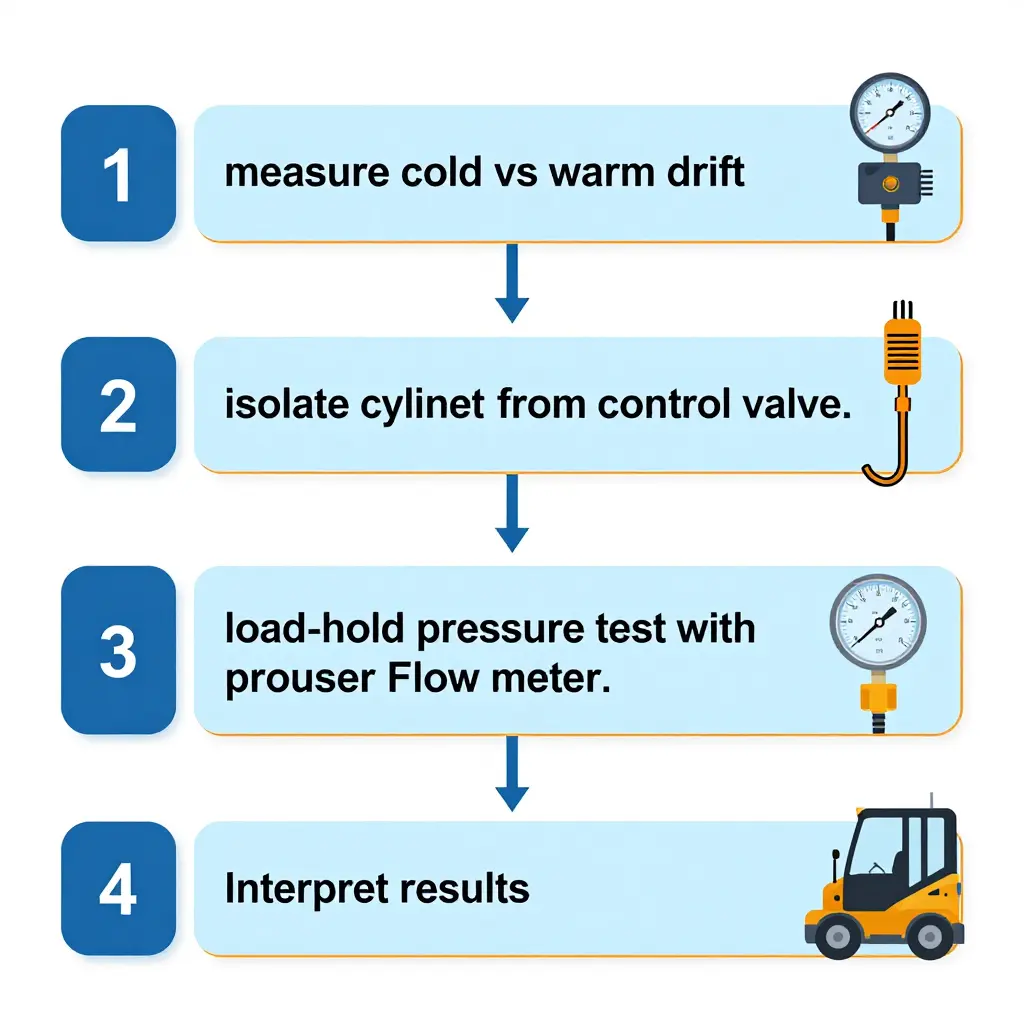
Step 1: Measure Cold Versus Warm Drift
Start with the machine cold. Raise the boom to a marked reference point, leave the lever in neutral with the engine off, and time how far the rod travels in one minute using a stopwatch and a tape measure. Repeat the test after the hydraulic oil reaches full operating temperature (roughly 50-60°C). If drift is minor when cold and grows sharply when hot, temperature-thinned oil is the likely culprit; if drift is constant at both extremes, a mechanical fault such as valve leakage is more probable.
Step 2: Isolate the Cylinder from the Valve
Cap the boom cylinder ports, or blank the cylinder with a test tee, so the valve is out of the circuit. Raise the load and observe. If the rod still drifts, the leak is inside the cylinder: worn seals or a scored bore. If drift stops, the problem is upstream in the spool, relief, or check valve.
Step 3: Perform a Load-Hold Pressure Test
With the boom supporting a known load, install a calibrated pressure gauge on the blind-end line and a flow meter in the return path. Hold the lever and record the pressure drop over several minutes. A steady decay points to internal bypass; flow on the meter while the lever is neutral confirms the leaking path.
Step 4: Interpret the Results
| Symptom | Probable Cause |
|---|---|
| Drift grows only when hot | Oil temperature effect |
| Constant drift, isolated cylinder still drops | Cylinder seal wear |
| Pressure holds when isolated, drops when connected | Valve leakage |
| Return flow present in neutral | Spool or check valve bypass |
Record every reading alongside ambient and oil temperature so the next inspection has a baseline.
Boom Cylinder Drift Diagnosis: Decision-Path Flowchart
Before ordering a new boom cylinder, it helps to walk the problem through a simple logic chain. The diagram traces that path: from the first observation of drift, through a pressure test, to the two most common culprits, internal valve leakage and elevated oil temperature.

How to read the path
- Start with the symptom. A cool machine drifts slowly, or a hot machine drifts fast. That early behavior is a clue, not a diagnosis.
- Pressure-test the circuit. Compare cylinder hold pressure against the manufacturer’s spec. This one test separates a structural cylinder fault from a control-side fault.
- Branch on the result. Pressure that bleeds down at the valve on a warm machine points to valve leakage. Pressure that holds cold but drifts when heat-soaked points to oil temperature.
- Confirm before you repair. Re-test cold and hot so you do not replace a healthy cylinder when the real fix is a spool, a seal, or cooling.
Use the flowchart as a checklist on your next troubleshooting call, and log the cold and hot readings side by side so patterns show up over time.
Preventive Maintenance and Mitigation Strategies to Control Boom Cylinder Drift
Boom cylinder drift rarely appears without warning. It develops as seals wear, oil degrades, and internal valve leakage grows. A preventive maintenance program catches those changes early, before drift turns into a safety or productivity problem. The measures below cover the hydraulic system as a whole, not just the cylinder.
Hydraulic Oil Analysis and Temperature Management
Scheduled oil analysis is the foundation of any drift-control plan. Test fluid every 500 to 1,000 operating hours for viscosity, water content, and wear metals. Rising particle counts or metallic debris point to wear inside the cylinder or control valve.
Oil temperature management matters just as much. Hot oil thins out and slips past worn seals and spools more easily, which amplifies drift. Keep operating temperatures inside the manufacturer’s range, inspect coolers, and do not ignore a rising temperature trend.
Seal Replacement and Control Valve Servicing
Seal replacement intervals should follow the OEM schedule, typically every 4,000 to 6,000 hours depending on duty cycle. Replace all seals and wear rings as a set during a rebuild; mixing old and new components invites early failure.
Control valve servicing deserves the same attention. Inspect spools, relief valves, and O-rings for scoring, and reseat or replace parts as needed. A fresh, well-tuned valve holds pressure better and limits the internal valve leakage that drives drift.
Filtration, Contamination Control, and Operator Best Practices
Filtration and contamination control protect every downstream component. Change hydraulic filters on schedule, use clean transfer equipment, and cap open lines during service. Even fine grit accelerates seal erosion.
Operator best practices extend component life. Avoid holding the boom under load longer than necessary, warm the machine before heavy work, and report drift symptoms as soon as they appear.
Monitor oil, temperature, and seals on a schedule, and drift stays a maintenance item instead of a breakdown.
Frequently Asked Questions About Boom Cylinder Drift
Operators and maintenance teams ask the same questions about boom cylinder drift. These answers cover the concerns about valve leakage and oil temperature.
Is boom cylinder drift always caused by valve leakage?
No. Valve leakage in the control valve is a leading cause, but worn piston seals, damaged cylinder bores, and faulty check valves contribute too. Internal bypass past the piston seal lets oil escape even when the spool is centered, so diagnosing the specific source prevents unnecessary part replacement.
How does oil temperature make drift worse?
Higher oil temperature reduces hydraulic fluid viscosity, so it flows more readily past worn seals and spool clearances. Drift becomes more pronounced as the machine warms up and after extended heavy digging. Monitoring oil temperature helps distinguish temperature-related drift from a sudden mechanical failure.
How quickly can boom cylinder drift be detected?
In minutes. Position the boom at a fixed height with the engine off, then measure how far it drops over a set interval. A drop beyond the manufacturer’s limit, often measured in millimeters per minute, confirms drift.
Can boom cylinder drift be repaired in the field?
Many causes, including external hose leaks and accessible spool issues, can be repaired in the field with standard tools and seal kits. Valve leakage inside the control valve or scored cylinder bores usually require a workshop with specialized equipment, clean conditions, and precise machining.
When should a boom cylinder be replaced rather than repaired?
Replace it when the barrel bore is deeply scored, the rod is bent, or repeated repairs fail to stop the drift. If sealing surfaces are damaged beyond hone limits, replacement is more economical. Ongoing oil temperature spikes and persistent valve leakage after a rebuild also justify a new or remanufactured unit.
Does operating technique affect boom cylinder drift?
Yes. Holding a loaded boom for long periods, running beyond rated capacity, and skipping warm-up cycles accelerate the seal wear that worsens drift. Letting the boom rest on the ground when idle and staying within load limits reduce stress and slow the internal valve leakage.
Conclusion
Three things matter most in hydraulic settling on excavators. Valve leakage is the primary internal cause: worn spool clearances, damaged seals, and internal bypass in the control valve let oil slip past the piston, so the boom settles under load even with the lever in neutral. Oil temperature amplifies the effect, because hot fluid loses viscosity and clearances open slightly, which raises the leakage rate. That is why drift is usually worse after a long, hot shift than at a cold start.
Structured diagnosis and preventive maintenance keep the problem in check. Instead of replacing parts at random, measure the drift rate, check fluid temperature, test the valve, and isolate the cylinder before committing to a repair. The same discipline supports prevention: clean fluid at the correct level, steady temperature monitoring, seals replaced on schedule, and drift logged over time. Each step keeps a small fault from becoming major downtime.
Treat settling as a measurable, temperature-sensitive, valve-related condition and it stops being a frustrating symptom. Operators and maintenance teams can then plan repairs instead of reacting to failures, protect the machine, and keep the job moving.